Gemini’s Agentic Era: Google I/O 2026
Google’s May 2026 event arrived in full force in the agentic era, unveiling several tools designed to improve our daily lives, boost productivity, and position Gemini as the definitive AI for everyday use.
The company shared the trajectory of tokens processed over the past two years and showed that, two years ago, models were handling about 9.7 trillion tokens per month. At last year’s Google I/O that figure rose to 480 trillion tokens.
As if that growth weren’t impressive enough, from last year’s I/O to the current event the company reported a sevenfold increase, reaching more than 3.2 quadrillion tokens processed per month. That works out to roughly 19 billion tokens per minute — sensible when you consider that around 13 of the company’s products have over 1 billion users.
Tools, tools, tools
Among the many tools presented, some are already available. They mentioned “Ask YouTube”: a feature where you can ask specific questions and the platform will point you to the right moment within videos.
They showcased “Docs Live”, an interesting tool that helps you organize a train of thought into a document. You describe the things you want to do, what you’re thinking, an outline, bullet points, or relevant data, and Gemini structures that into a document with support for tables, lists and more.
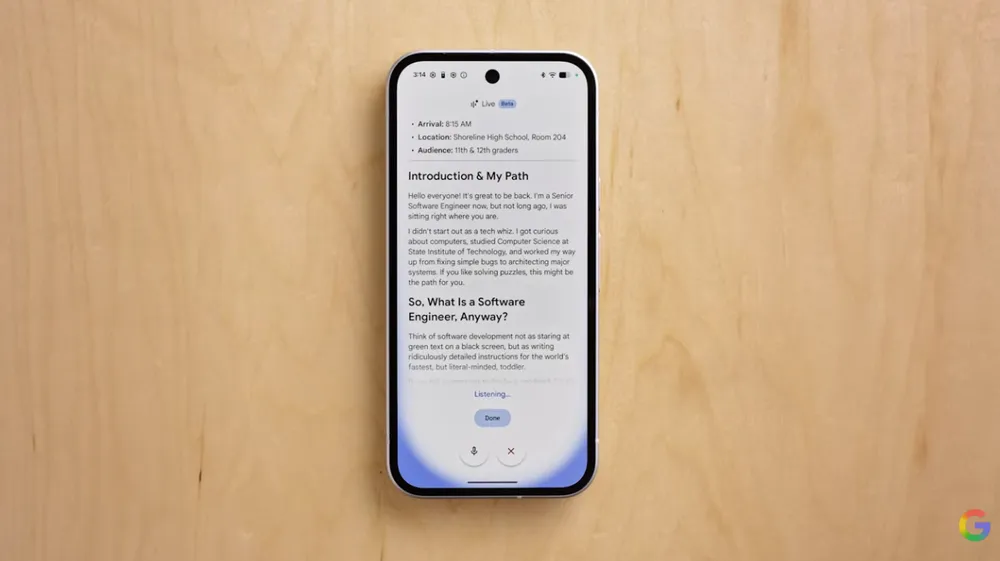
“Google Pics” is a tool for creating and editing images, powered by Nano Banana. The company says it will let you edit, comment, create and refine images. For now it isn’t broadly available and will be limited to Google AI Pro and Ultra subscribers mid-year.
“Daily Brief” is an extremely useful feature to summarize your inbox, calendar and key highlights of the day into a short morning briefing.
“Gemini Spark” is still in closed testing and is a personal AI agent inside the Gemini app. Its goal is to “organize your digital life”, integrating seamlessly with everyday tools — initially, primarily Google’s own services.
Antigravity and Ultra
Antigravity is evolving beyond the well-known desktop app, which is also receiving a new version. Google is introducing the “Antigravity CLI” and encourages migration from the Gemini CLI to the new tool. They also highlighted the “Antigravity SDK”, a set of tools for developers to define custom behavior and host it on their own infrastructure.
The Google AI Ultra subscription now starts at $100, with a $200 plan promising access to cutting-edge tools like the new Omni and additional Street View resources. The $100 tier is currently available only in the United States.
Gemini 3.5 Flash and Omni
Although a Gemini 4.0 wasn’t announced, we did see important updates: the “Gemini 3.5 Flash” family, released earlier this year, promises to be smart and very fast. According to Google, it responds up to four times faster than other leading models.
It is also more capable than the 3.1 Pro, especially in programming tasks. In GDPVal tests, it ranked between GPT‑5.4 and Mimo V2 Pro, slightly above the recent Deepseek V4 Pro.
One of the most interesting announcements was “Gemini Omni”: “Create anything from anything.” The idea is to produce any type of output from any type of input. For example, if you need a specific video from a written document, Omni aims to do that — or to take a video and produce an image or text from it.
For now Omni primarily outputs video, but Google plans to add images and text soon. According to Google, “this new model brings together Gemini’s intelligence and our media generative models — a major step forward in understanding the real world.” Omni is already available in Google Flow and YouTube Shorts and will reach the API soon.
Google Glass and XR
The story of Google Glass goes back more than a decade to around 2013. Since then Google has experimented with and discontinued products, but it seems the company may finally have something more practical. Recent smart glasses like the Ray‑Ban Meta have shown a glimpse of the new era, and with Gemini Google appears to be going all in.
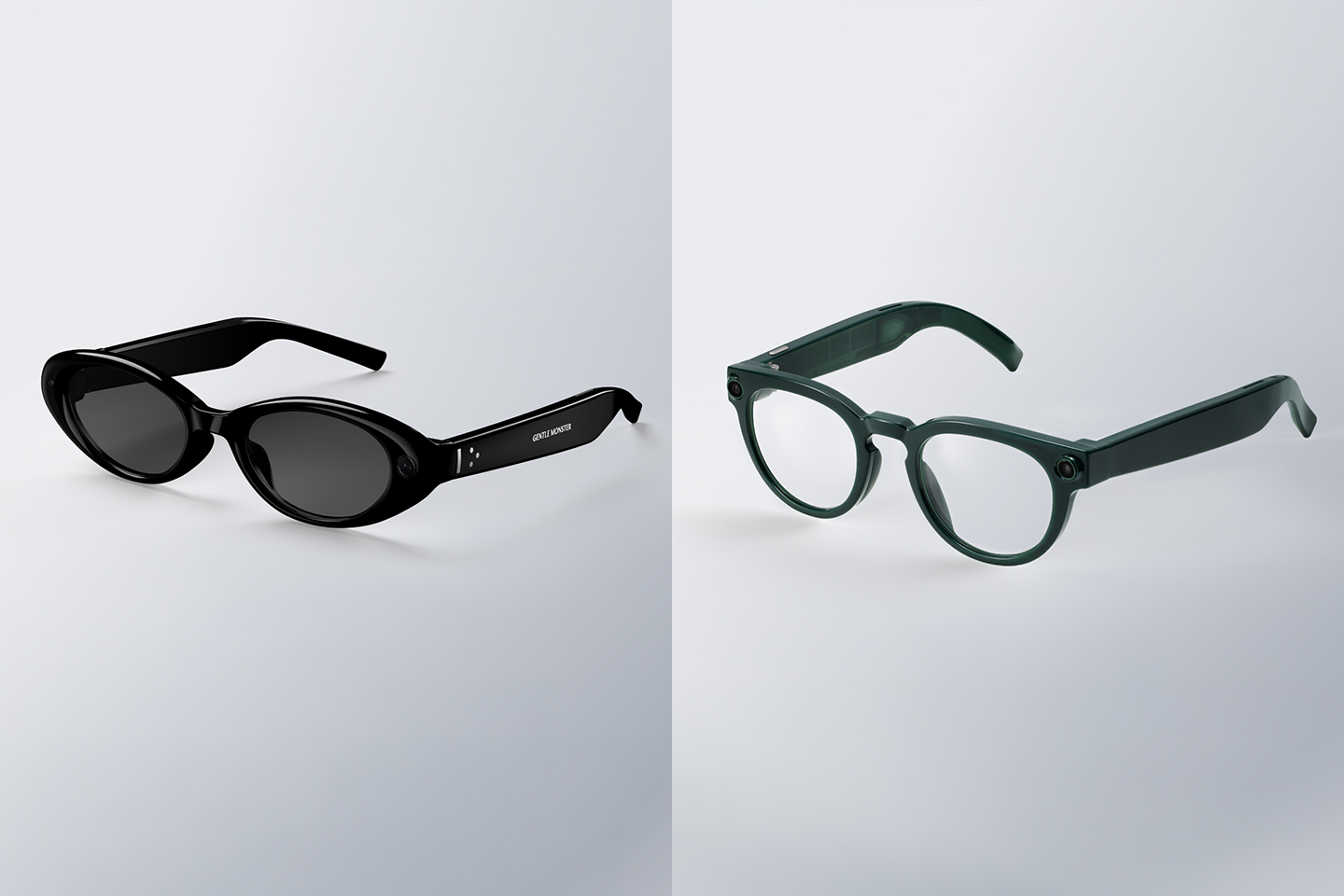
A demo showed a scenario where the user could ask the glasses to guide them to a last-known location, ask questions, and capture a photo that would then be turned into a cartoon based on the moment. Google also demonstrated real‑time speech and text translation, assistance with daily tasks, and handling calls and messages. No firm release date was given, but a release is expected by the end of the year.