5 benefits of tools for AI agents
We’ve entered the “Agentic Era” when it comes to generative AI, and using tools in AI agents can be highly effective for a range of tasks.

AI agents are autonomous systems that understand their environment and solve problems according to an objective. To do this, they may use an LLM as their “brain”, have memory, and call external tools.
In a simple analogy, a head chef—even with great skill—can’t always produce outstanding dishes without good ingredients.
In this article you’ll learn the advantages of connecting specific tools so agents can perform better. Read on!
1. Access to real-time information
When you chat with ChatGPT, Gemini, Claude and others, generative models produce text based on their pretraining.
However, when an agentic system can connect to tools that perform web scraping (automatically collecting data from websites), you gain access to real-time information.
Knowledge ceases to be limited to a fixed training cutoff and can supply current data needs.
This is particularly relevant for decision-making, especially for people who work with research daily.
Imagine someone in agriculture: having an agent that accesses the weather forecast, for example, can be highly strategic.
In journalism, connecting tools that scan news sources is useful to combat misinformation.

2. Execution of complex and precise tasks
Although AI can generate a lot of content, it’s important to understand its limitations and the risk of hallucinations.
You’ve probably seen memes of ChatGPT attempting calculations and getting them wrong.
This happens because models are excellent at processing natural language but not necessarily at arithmetic or precise computations.
By integrating tools such as a calculator or a code interpreter, you make your agent more reliable for calculations and technical tasks.
You delegate the objective of “reasoning” for complex requests to components that are designed for that purpose, reducing the risk of incoherent answers.
Additionally, connecting reasoning tools helps the model structure steps and solve problems step-by-step.
3. Interaction with external systems and platforms
In this technological revolution, one of the main reasons companies invest in AI is the ability to connect APIs for more efficient interactions.
Tools that enable agents to connect with other systems create a bridge between relevant data and LLMs.
Imagine your chatbot on the website accessing the Google Calendar API to manage schedules efficiently.
This allows meetings to be booked without conflicts, improving day-to-day customer service.
Over the medium and long term, such integrations can lead to more efficient workflows and free teams to focus on other critical areas.
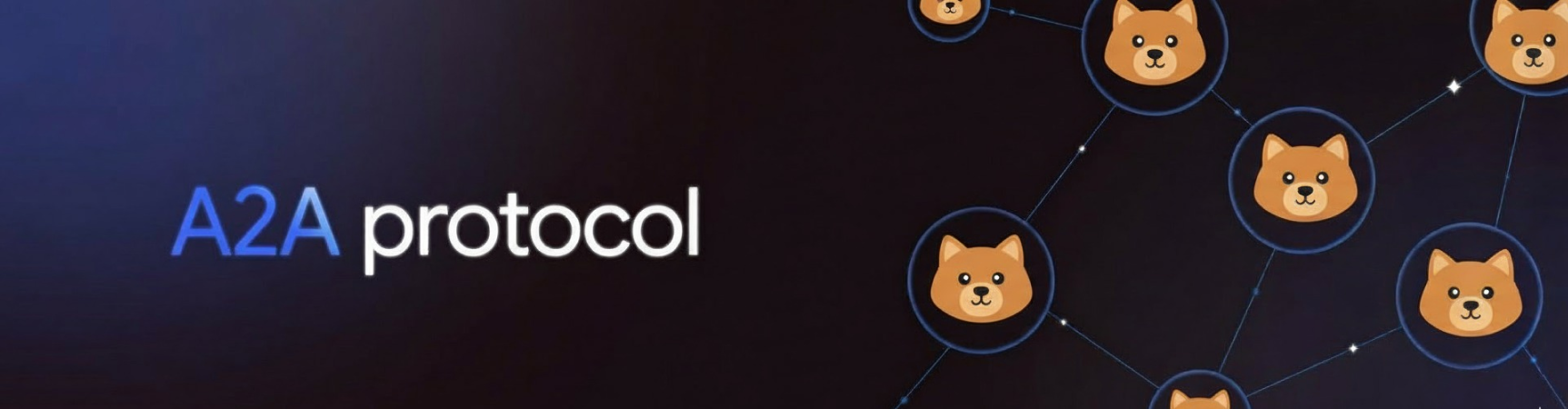
Considering Google’s A2A (Agent2Agent) framework, generative AI communication will happen between agents from different domains cooperating with each other.
4. Personalization and advanced contextualization
New hires don’t always immediately grasp company culture, even with extensive manuals and training.
An agent connected to tools tied to a knowledge base can help with onboarding.
You can feed the agent all official company content so a user can chat and learn the organization’s culture.
Tool-connected agents can better understand brand voice, maintain identity, and identify purchase histories, among other things.
A travel agency, for example, can build an agent that generates itineraries based on a chat conversation.
This enables a more personalized use of generative AI, tailored to individual preferences rather than generic templates.
5. End-to-end automation of workflows
Many organizations want to boost their business with AI, and using tools in agents is very effective for that.
It’s possible to automate complex workflows because agents can orchestrate multiple tasks divided into several steps.
If there are mechanical functions in a company, agents help optimize productivity.
This agentic approach can involve not just a single tool but several tools in a flow aimed at solving project problems.
It’s important to understand agent autonomy: they may choose the tools best suited to the objective they’ve been given.
Also, choosing the right tool for a task matters because it can impact the model’s short-term memory.
Equipping AI agents with tools can raise them to a new level of usefulness. They become proactive, efficient digital assistants capable of interacting with the world, executing tasks precisely, and automating complex processes.