
Moonshot launches Kimi K3 and shows what it is capable of
Moonshot AI, owner of the Kimi franchise, introduced today, July 16, the Kimi K3. One day after launching the K2.7 High Speed, a version focused on higher speed, the company now presented its new frontier model.
The K3 is a 2.8 trillion parameter model, with a 1 million token context, native vision capabilities, and a focus on tasks such as software engineering, knowledge work, and long-term reasoning.
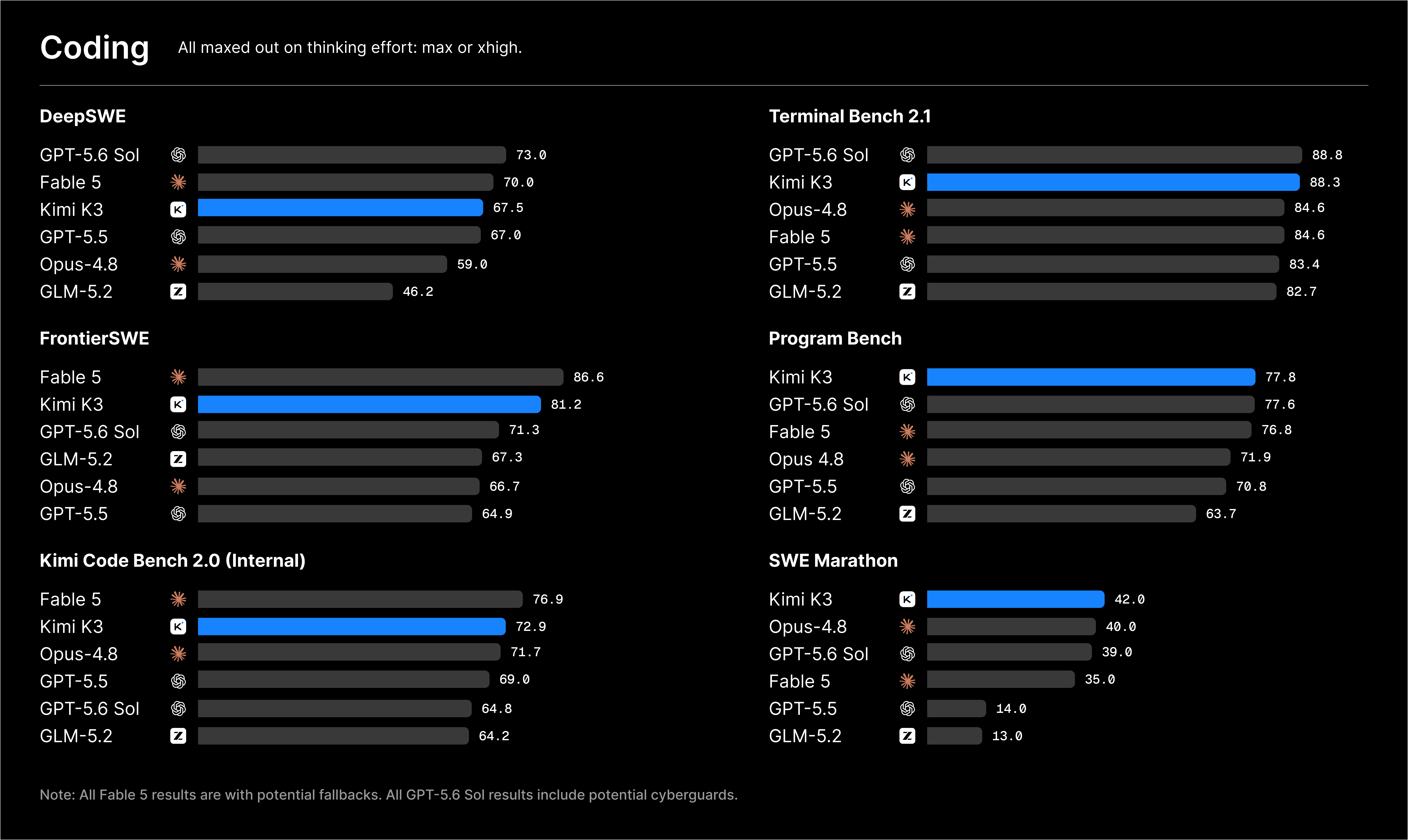
Wait, better than Fable?
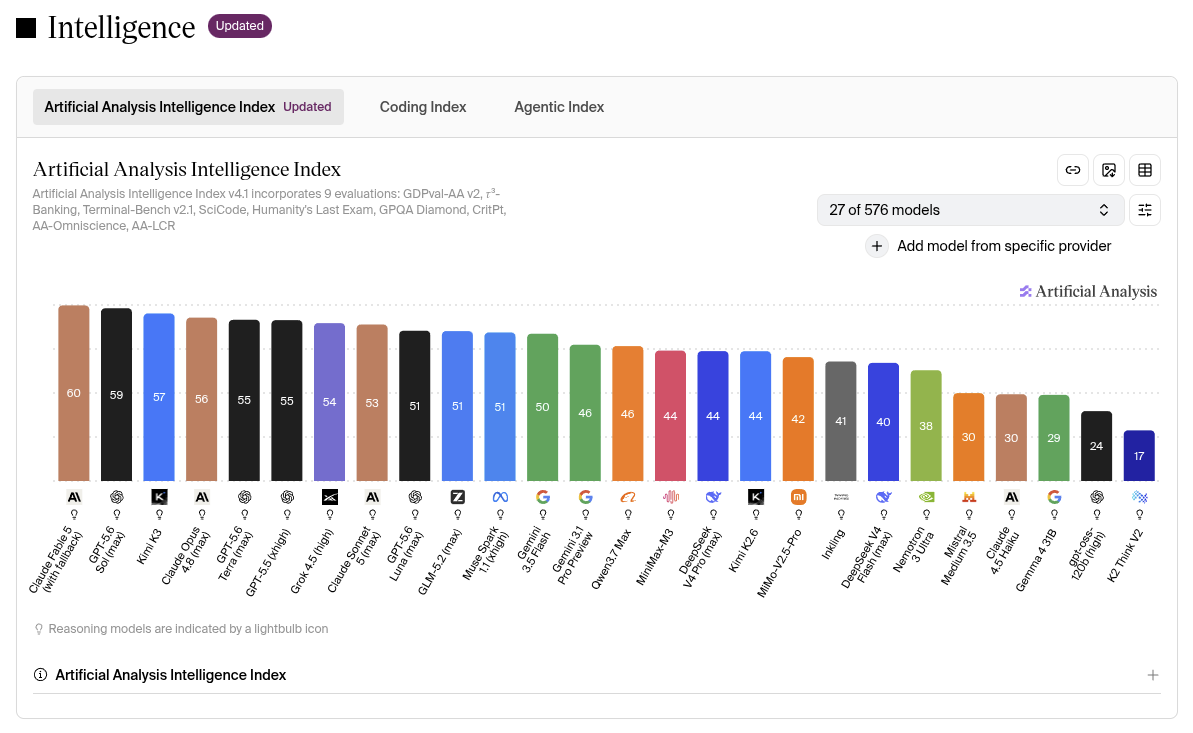
The K3 has impressive performance. In benchmarks released by Moonshot itself, it appears between GPT 5.6 Sol and Claude Opus 4.8 in general capability, and in several tests it consistently manages to surpass Opus 4.8.
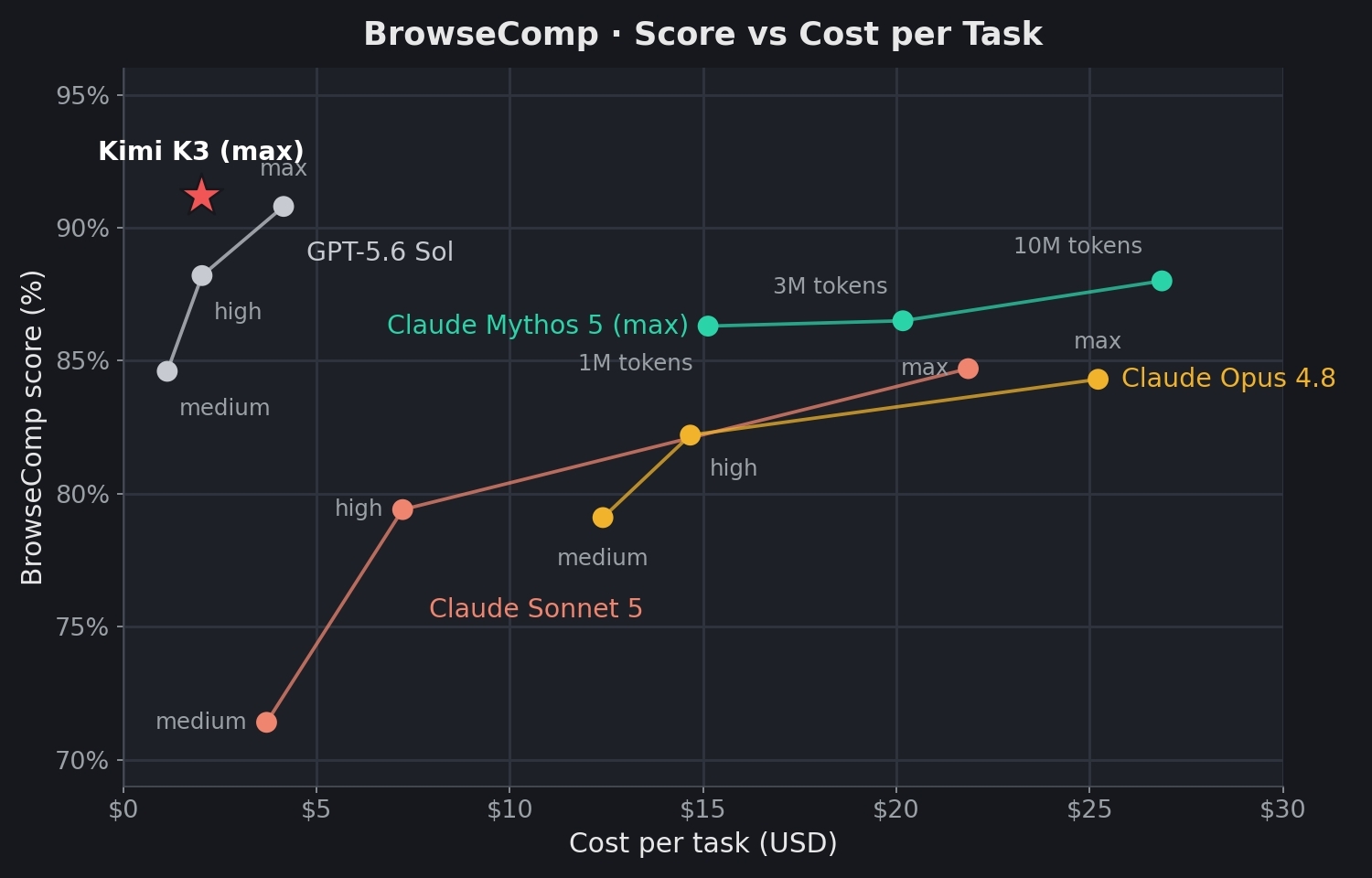
The benchmarks are especially strong in coding tasks, agentic workflows, and use in large repositories. The company also highlights cases related to more visual software engineering, such as CAD, game development, and flows with screenshots, video, and multimodal assets.
One of the most emphasized points in the official blog is exactly the performance in long engineering sessions, with little human supervision, navigation in massive repositories, and use of terminal tools.
Aggressive price
The prices are hyper competitive. For cached input, the price is 30 cents per million tokens; for uncached input, 3 dollars per million; and for output, 15 dollars per million tokens.
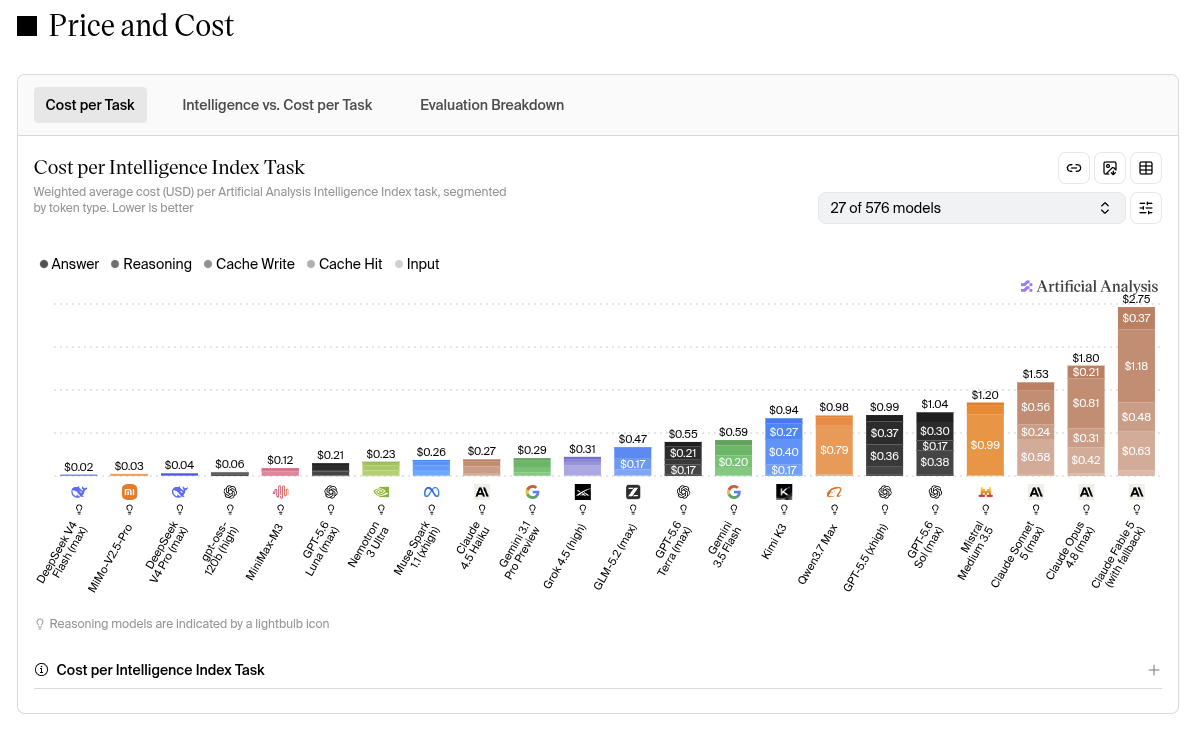
It is impressive how Moonshot manages to deliver above-expected performance, going head-to-head with some of the best models on the market for a much lower price. On paper, this places Kimi K3 in an extremely aggressive position in the cost-to-capability ratio.
Multimodal and creation
The blog also comments that the model, being multimodal, can do video editing, motion, and animations naturally. In one of the examples, Moonshot itself claims that a Kimi K3 teaser was edited by the model itself.
According to the company, this type of task would take something like one to two days of work for an experienced editor, or three to five days for a beginner. The proposal here is to show not only text or code generation, but practical multimedia production capability.
Widgets and Dashboard
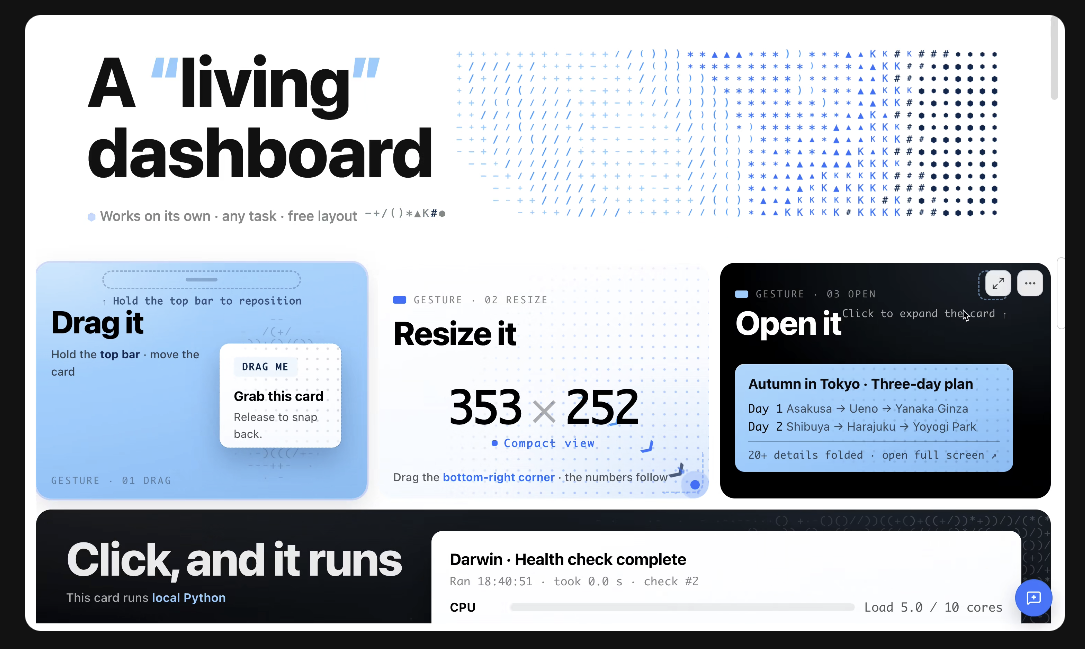
In addition, Kimi Work also received new features. Two new features were introduced: Widgets and Dashboard.
Both bring a more visual and natural way to organize components, information, and tasks within the platform. According to Moonshot, Widgets allow generating interactive components directly in the chat, while Dashboard gathers these elements into a persistent and personalized view by project, theme, or objective.
Important disclaimers
As a footnote, the Kimi blog itself leaves some very interesting disclaimers.
The first is history sensitivity. K3 was trained to preserve long thought periods, so the agent’s performance may fail when you switch from one model to another. If you go, for example, from a 2.7 model to 3, it may not produce such a high-quality result.
Therefore, they recommend that, to maintain quality, the entire conversation history and all context should already be within the Kimi K3 window.
Another issue mentioned in the blog is that Kimi K3 operates more effectively when it has very specific boundaries, clear instructions, and well-defined frontiers. It can act better when it has a more rigid sequence of steps. If the user gives something ambiguous, or the model encounters small problems, it may make unexpected decisions due to this “excessive proactivity”.
The third observation, which also draws attention, is that the blog itself states that, despite being a hypercompetitive model, Kimi K3 has a notable gap in user experience when compared to Fable 5 and GPT 5.6.
References
- Kimi K3 Tech Blog: Open Frontier Intelligence
- Kimi API Platform - Model List
- Moonshot AI
- digital analysis