Over the past seven days, OpenAI, Anthropic and Google all shipped something new. OpenAI opened ChatGPT to businesses, Anthropic launched Fable 5.2 and new productivity tools, and Google released Gemini 4 Carbon without much fanfare.
A new era: businesses inside ChatGPT
The most important announcement of the week wasn’t a model. On Tuesday, November 10, OpenAI launched Businesses in ChatGPT in beta, a program that puts businesses inside ChatGPT.
It works much like a Google Business Profile. Through the new Business Hub, a company claims its profile, confirms it owns it (by phone, email, website domain or Shopify account) and gets a blue verification badge. From there, it can correct its information and add products with prices and stock. When the company shows up in an answer, users can open its profile, see what it offers and its shipping and returns terms, and go straight to the website or start a chat.
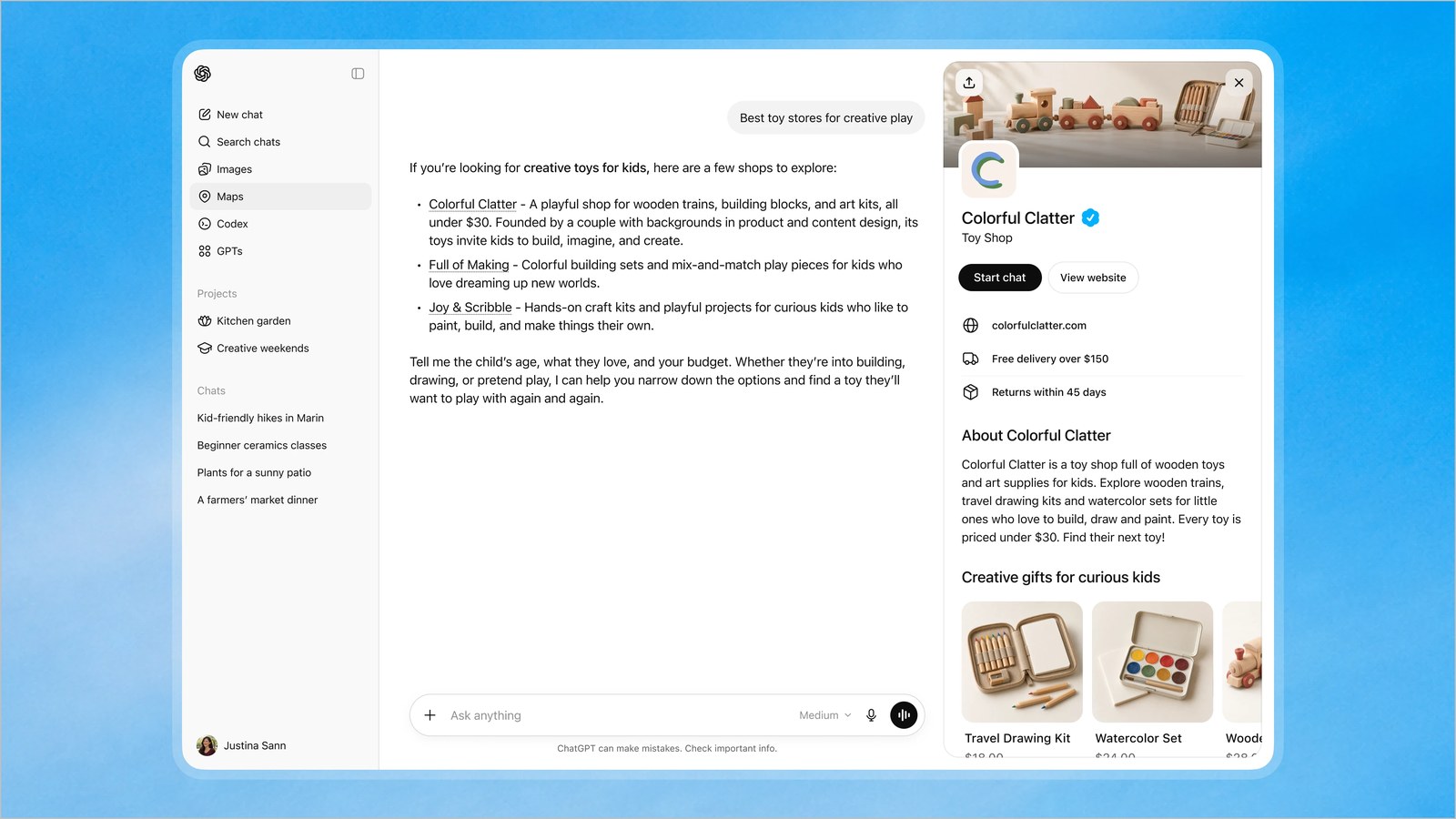
Example shared by OpenAI: when it recommends stores, ChatGPT opens the company’s verified profile, with products, prices and shipping terms.
On the other side, the company gets to see how it’s being found. The dashboard shows how many times ChatGPT mentioned it, how many people opened its profile, how many clicked through to the website and the main topics that led people to it, all in aggregate.
In the United States, online stores and digital services can also create a Business Agent: a branded agent inside ChatGPT that answers questions about products and policies following the rules the company sets. This agent can be sponsored and become the destination of ChatGPT ads, which already run in 89 countries. OpenAI says ads are labeled and kept separate from answers.
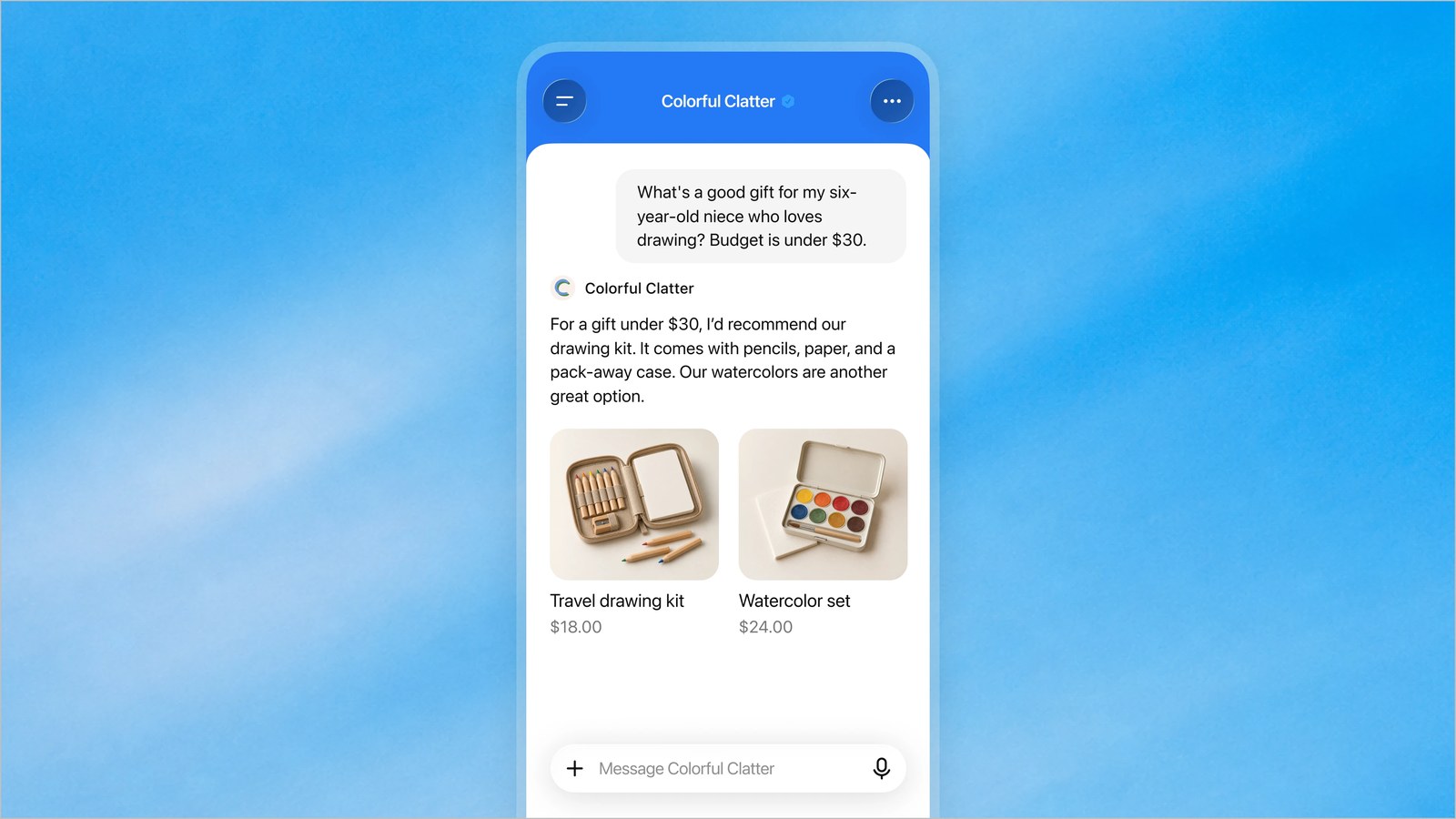
The store’s Business Agent answering inside ChatGPT and suggesting products within the customer’s budget.
This is the start of a new era in how the internet deals with AI and paid traffic. For a long time, being found meant showing up on Google and buying ads there. Now, more and more people ask ChatGPT directly where to buy, which service to hire or which company can solve their problem. With verified profiles, mention metrics and sponsored agents, ChatGPT becomes a customer acquisition channel. For now, the most complete features are limited to the United States, and companies in other countries report being put on a waitlist, but OpenAI has already promised to bring the program to more markets.
OpenAI: the focus is now on services
Even with GPT-6.1 Sol, launched at DevDay in late September, and GPT-6.1 Terra, which arrived on October 26 at half the price of its predecessor, models are no longer the center of attention at OpenAI. Over the past few months, the company has been far more focused on building services inside ChatGPT than on competing on benchmarks.
- Dots (September 29): always-on agents. Each dot has its own cloud computer and browser, connects to thousands of apps and keeps working on the user’s goals in the background. You can also talk to it through Slack and Teams.
- Intelligent UI (October 7): ChatGPT’s interface adapts to the conversation. Instead of plain text, answers can come with charts, forms, calculators and interactive buttons, to make the content clearer and simpler.
- GPT-Live (July): ChatGPT’s new voice, which speaks and listens at the same time. You can interrupt naturally, as in a real conversation.
- ChatGPT Images 2.6 (November 4): image generation now creates GIFs and lets you save references of characters and pets to reuse in other chats.
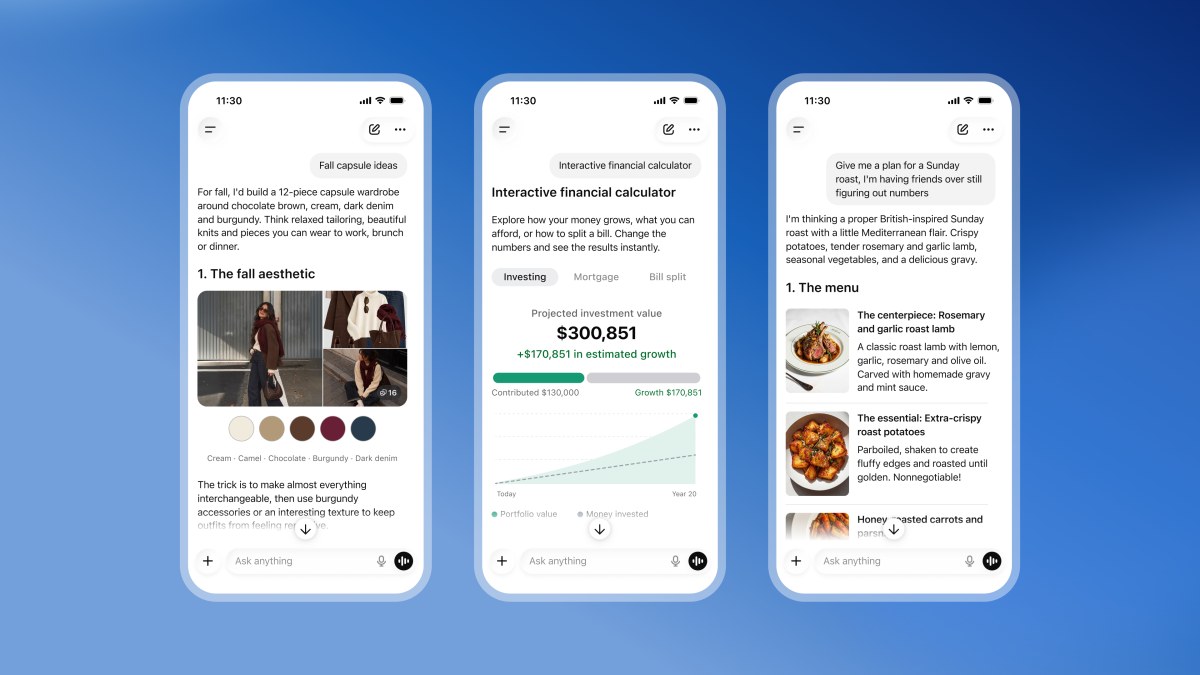
Intelligent UI turns answers into interfaces: palettes, calculators and menus built on the fly.
It’s an interesting strategy. While the market argues over which model is one point ahead in the rankings, OpenAI is betting that users will stay for the whole package: voice, images, agents, interface and, now, businesses.
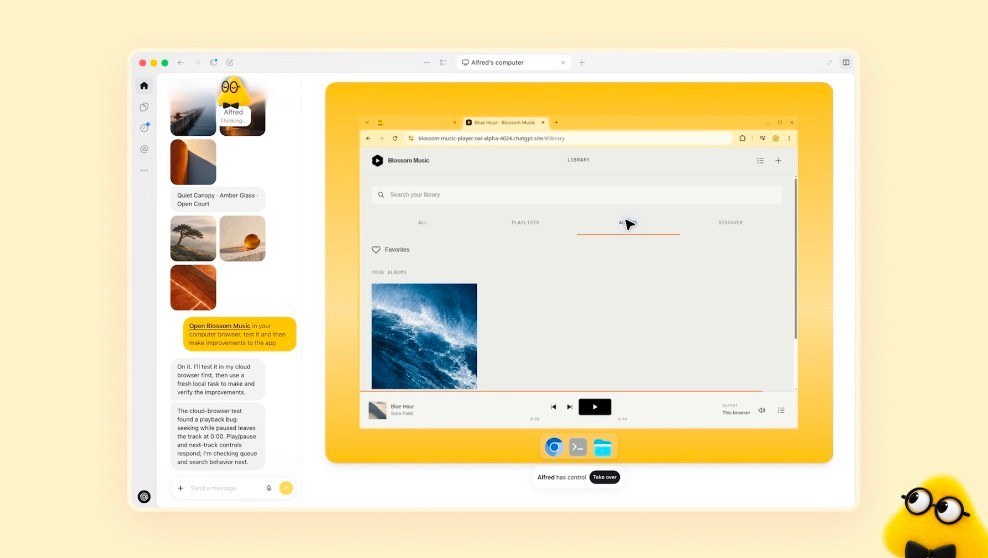
A dot testing an app in its own cloud browser.
Anthropic: on top, once again
Less than two weeks after losing first place to Gemini 4 Carbon, Anthropic is back on top with Fable 5.2. And, unlike OpenAI, it has been going both ways: it ships frontier models and, at the same time, turns Claude into an increasingly complete work tool.
Claude Fable 5.2 and Mythos 5.2
On Monday, November 9, Anthropic launched Claude Fable 5.2 and Claude Mythos 5.2, its frontier models. Both are the same model. The difference is that Fable comes with stricter cybersecurity and biology safeguards and can be used by anyone, while Mythos is limited to verified organizations in those fields. According to Anthropic, they respond up to 30% faster than version 5.1, use fewer tokens to complete the same tasks and match or beat Opus 5.5 on most alignment and safety measures.
Today, Fable 5.2 is the best model available. On the Artificial Analysis index, it ranks first in every area evaluated, from finance to engineering. It’s also not the cheapest: it costs $8 per million input tokens and $40 per million output tokens, twice as much as Gemini 4 Carbon after its introductory period.
A few details stand out:
- Comparison with Carbon. In its agentic coding charts, Anthropic compared Fable with GPT-6 Astra and with Gemini 4 Carbon, which was only released to the public the next day.
- More effort doesn’t always pay off. In the FrontierCode 2.0 cost data by effort level, Fable at xhigh scores 49.1% and costs about $14 per task. At max, it drops to 45.7% and costs more than $44. In other words, xhigh comes out better and cheaper.
- Models bunched together. Fable, Opus and GPT-6 Astra are very close on several tests. On FrontierSWE v2, for example, Fable scores 69.9%, Astra 65.5% and Opus 62.3%. Carbon, meanwhile, trails Fable on almost every one of Anthropic’s tests, with 41.1% on FrontierCode (at medium effort), and only leads on AutomationBench, which measures workflow automation.
It’s worth remembering that these models are meant for a different kind of use. Fable and Mythos were designed for cybersecurity, science and heavy engineering. Anthropic itself recommends starting with Opus 5.5 for most coding and everyday work, and only moving up to Fable when needed.
Claude wants to be your productivity tool
On the services side, Anthropic launched Personal Finance on November 5, in beta for subscribers in the United States. Users connect their bank accounts and cards, and Claude analyzes spending by category, tracks upcoming bills, finds forgotten subscriptions and builds charts and dashboards. Access is read-only: Claude can’t move money or make payments.
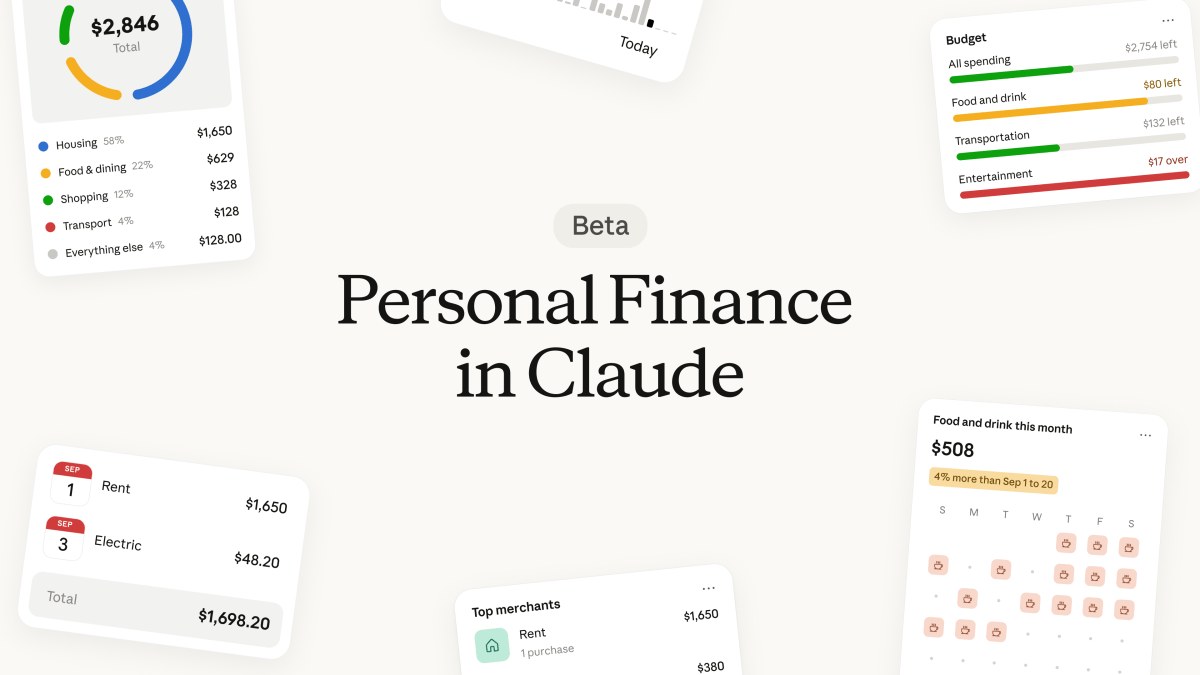
Alongside that, Claude has been gradually expanding the kinds of material it can create and edit natively. In September, it gained documents, presentations and designs. This week brought spreadsheets with tabs and formulas (Claude Sheets) and collaborative boards for meetings (Claude Whiteboards), both in beta. Data dashboards, now called Claude Data, came out of beta and connect to sources such as BigQuery, Snowflake and Salesforce. Connectors to other apps also became interactive.
The direction is clear: Anthropic wants Claude to integrate with and, in some cases, replace the productivity tools we use today, such as spreadsheets, slides and whiteboards.
Google: good models, a quiet ecosystem
Google, by contrast, remains more reserved. After Gemini 4 Argon and Gemini 4 Carbon, which posted strong benchmark numbers, Carbon was released to the public on Tuesday, November 10. Once again, though, only for those on the most expensive plan: in the Gemini app, Carbon is available only on Ultra, while Pro subscribers stay on Argon. In the API, it’s open to developers on the paid tier.
Google has plenty of resources, not just financial but product-wise: NotebookLM, Workspace, Android, Search itself. The Gemini app has passed 1 billion monthly users, driven largely by its integration with Android and Search. Even so, the company hasn’t managed to become the reference for the general public. ChatGPT is still synonymous with AI for most people, and Claude has become the choice of those who code and do technical work.
Its marketing is also low-key. The Gemini YouTube channel has a few videos about Gemini 4 Argon, published three or four weeks ago, but the messaging is simple and far less aggressive than what OpenAI and Anthropic do with every launch. With phased rollouts and access limited to the most expensive plan, it feels like Google still hasn’t decided to really fight for the audience that’s already with its competitors.
Sources
- OpenAI: Businesses in ChatGPT
- PPC Land: ChatGPT Business Hub data
- TechCrunch: OpenAI launches dots
- TechCrunch: ChatGPT gets more visual with Intelligent UI
- TechCrunch: OpenAI releases new voice models
- MarkTechPost: ChatGPT Images 2.6
- Anthropic: Claude Fable 5.2 and Claude Mythos 5.2
- ComputingForGeeks: Fable 5.2 cost by effort on FrontierCode
- TechCrunch: Personal Finance in Claude
- Claude: Sheets, Whiteboards and interactive connectors
- 9to5Google: Gemini 4 Carbon arrives in the Gemini app for AI Ultra
- TechCrunch: Google releases Gemini 4 Argon
- Artificial Analysis